














Sustainable Cleaning with Robotics in Shopping Centres
Shopping centres are under growing pressure to run cleaner, more efficient, and more sustainable operations. Large floor areas, constant footfall, extended opening hours, and the need for consistent presentation all place pressure on cleaning teams and operating budgets.
For many shopping centre operators, sustainability is becoming part of how buildings are managed, how services are delivered, and how resources are used more responsibly. Savills notes that greener retail stock is closely tied to environmental and operational efficiencies, and that ESG is pushing institutions to rethink how schemes are managed and operated.
This is where robotic cleaning is starting to make a practical difference.
Rather than treating sustainability as a brand message, shopping centres are beginning to look at it through an operational lens. How much water is being used? How much electricity is being consumed? How much manual intervention is required to maintain standards across a busy site? How easily can cleaning performance be repeated day after day without placing more strain on internal teams?
Robotic cleaning helps answer those questions in a way that is measurable. It gives operators a route to cleaner floors, more controlled resource usage, and better deployment of staff time across high footfall environments.
Why Sustainable Cleaning Has Become a Bigger Priority in Shopping Centres
Sustainability in shopping centres is often discussed in terms of lighting, HVAC systems, retrofits, or building certifications. These are all important, but day-to-day cleaning operations also play a meaningful role in how efficiently a site runs.
Cleaning takes place across some of the most visible and most frequently used parts of a shopping centre. It directly affects visitor perception, operational standards, and the working rhythm of facilities teams. It also involves recurring use of water, electricity, chemicals, equipment, and labour. That matters because sustainability targets are increasingly tied to how buildings perform in use, not just how they were designed. Savills highlights that retail property owners are moving towards in-use environmental performance and operational efficiency as part of the wider sustainability conversation.
For shopping centre teams, this changes the conversation. Sustainable cleaning is no longer just about switching products or adjusting procedures. It is about building a cleaning model that can maintain standards while using resources more intelligently.
Where Traditional Cleaning Models Can Fall Short
Traditional floor cleaning methods still play an important role, but they can become difficult to scale efficiently in large public environments.
In shopping centres, teams are often managing:
- Long operating hours
- Repeated cleaning across the same busy zones
- Changing footfall patterns throughout the day
- Pressure to maintain visible cleanliness without disrupting visitors
Manual cleaning equipment often depends on continuous staff input, repeated machine handling, and less precise control over resource use. In a large shopping centre, this can make it harder to achieve the balance operators want between cleanliness, labour efficiency, and sustainability performance. Robotic cleaning fits that conversation because it improves the performance of an everyday operational activity rather than relying solely on a major capital retrofit.
How Robotics Supports More Sustainable Cleaning Operations
The strongest case for robotic cleaning is not that it sounds innovative. It can improve how resources are used in a real working environment. For shopping centre operators, the sustainability value usually comes from four areas.
More controlled water and energy usage
Autonomous cleaning robots are designed to deliver repeatable cleaning with more consistent use of water and power. In the right setting, that can reduce unnecessary consumption compared with more traditional equipment and processes.
Reduced staff intervention for routine floor cleaning
This does not mean replacing cleaning teams. It means reducing the amount of time people need to spend on repetitive floor coverage so they can focus on higher-value tasks, reactive cleaning needs, detail work, and spot cleaning.
Better consistency across large public spaces
A shopping centre cannot afford a visible variation in cleaning standards across different zones. Robotics helps create more repeatable performance, especially in large open areas where consistency is difficult to maintain manually over long periods.
Stronger operational visibility
Many robotic systems provide cleaning data, task history, and performance tracking. That gives operators more visibility into what has been cleaned, how often, and how the equipment is performing over time. For teams trying to improve efficiency and report against broader operational goals, that visibility matters.
This is where the sustainability case becomes more commercially relevant. Better resource control, less repetitive manual input, and more consistent performance can support environmental goals while also improving day-to-day efficiency. If shopping centre operators are reviewing whether their current cleaning model can meet both service expectations and sustainability targets, this is exactly the kind of operational area worth reassessing.
What This Looks Like in Practice at Eldon Square
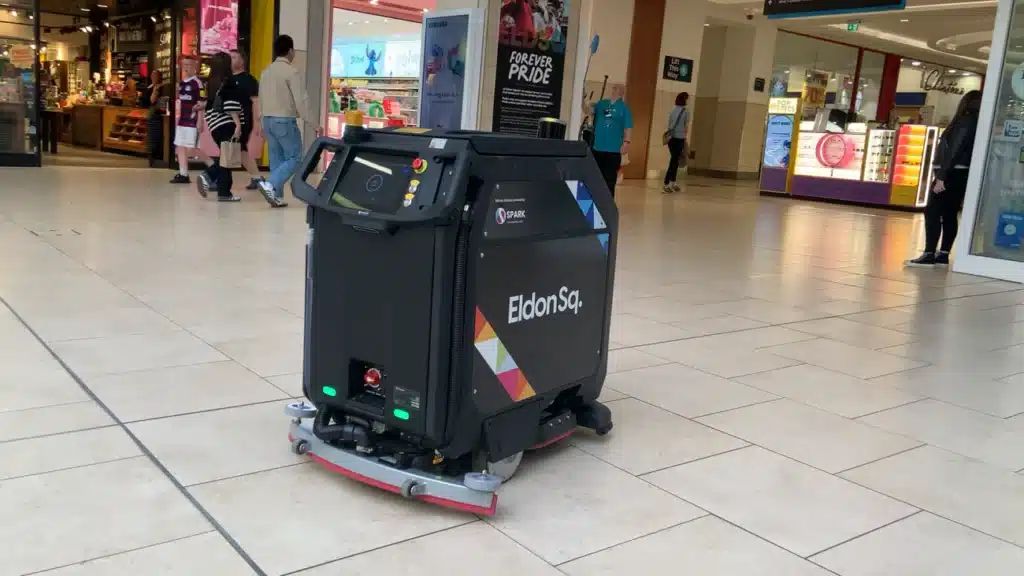
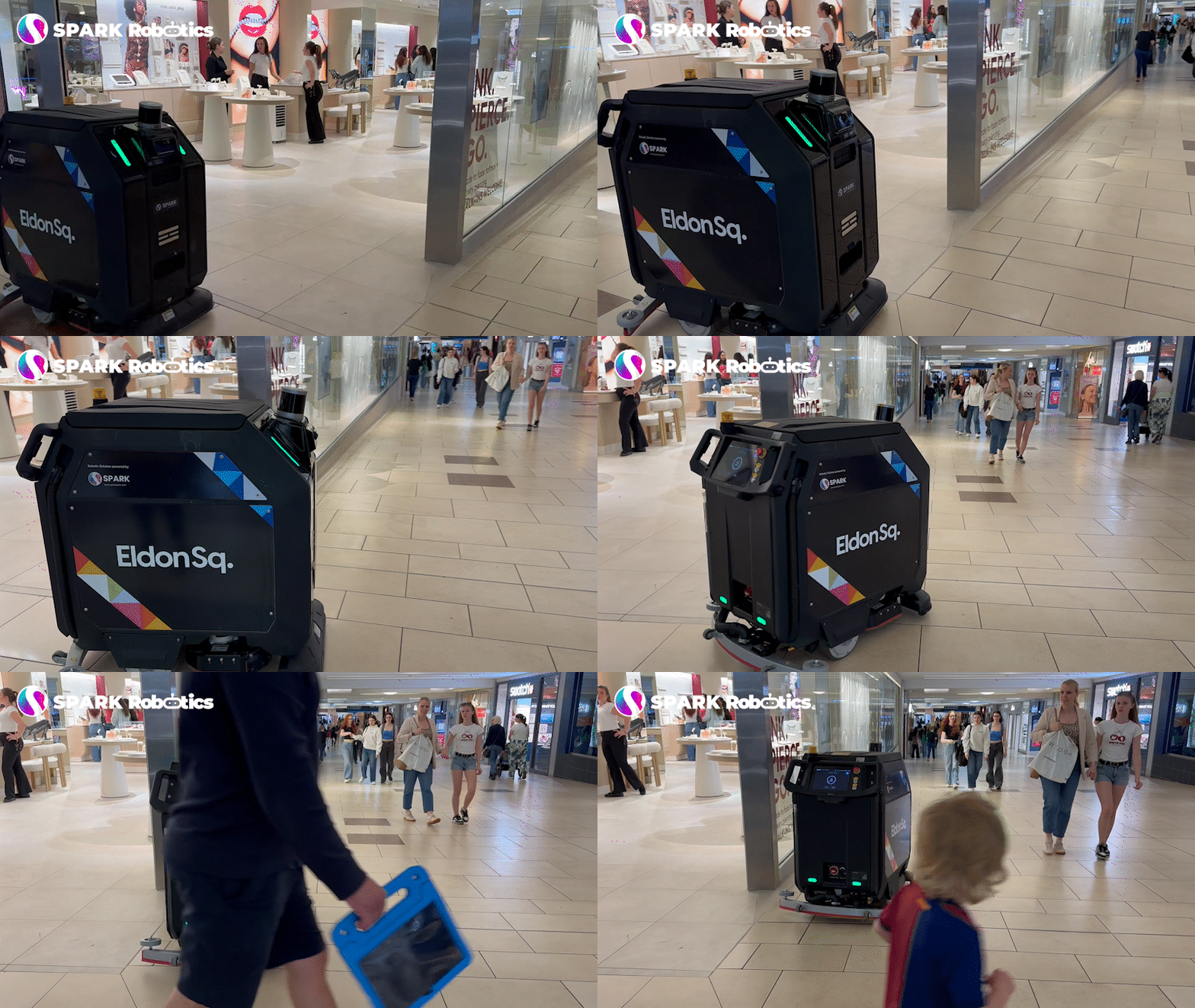
A good example of this can be seen in SPARK Robotics’ work with Eldon Square in Newcastle.
According to SPARK Robotics, Eldon Square introduced the L50 autonomous floor scrubber as part of a move to modernise commercial cleaning operations in a high footfall shopping and leisure environment. The site needed a smarter and more sustainable approach to maintaining large floor areas while supporting the on-site team more effectively.
The operational outcomes are what make the example useful.
L50 can clean up to 2,570 square metres per hour, operate for up to six hours on a single charge, and return automatically for recharge or refill without human intervention. Its intelligent water and energy management can reduce water use by up to 69 per cent and electricity use by up to 55 per cent compared with conventional machines.
More importantly, the live site results give the sustainability argument some weight. Since the initial rollout at Eldon Square, the robot has logged more than 1,194 hours of autonomous cleaning, completed 433 tasks, covered over 929,929.58 square metres, and saved more than 45,370 litres of water compared with traditional cleaning methods.
That is the kind of example buyers need.
It moves the conversation away from product language and towards site outcomes.
- Less water is used.
- Less manual strain on teams.
- Consistent cleaning across a busy retail environment.
- Better support for sustainability goals without compromising standards.
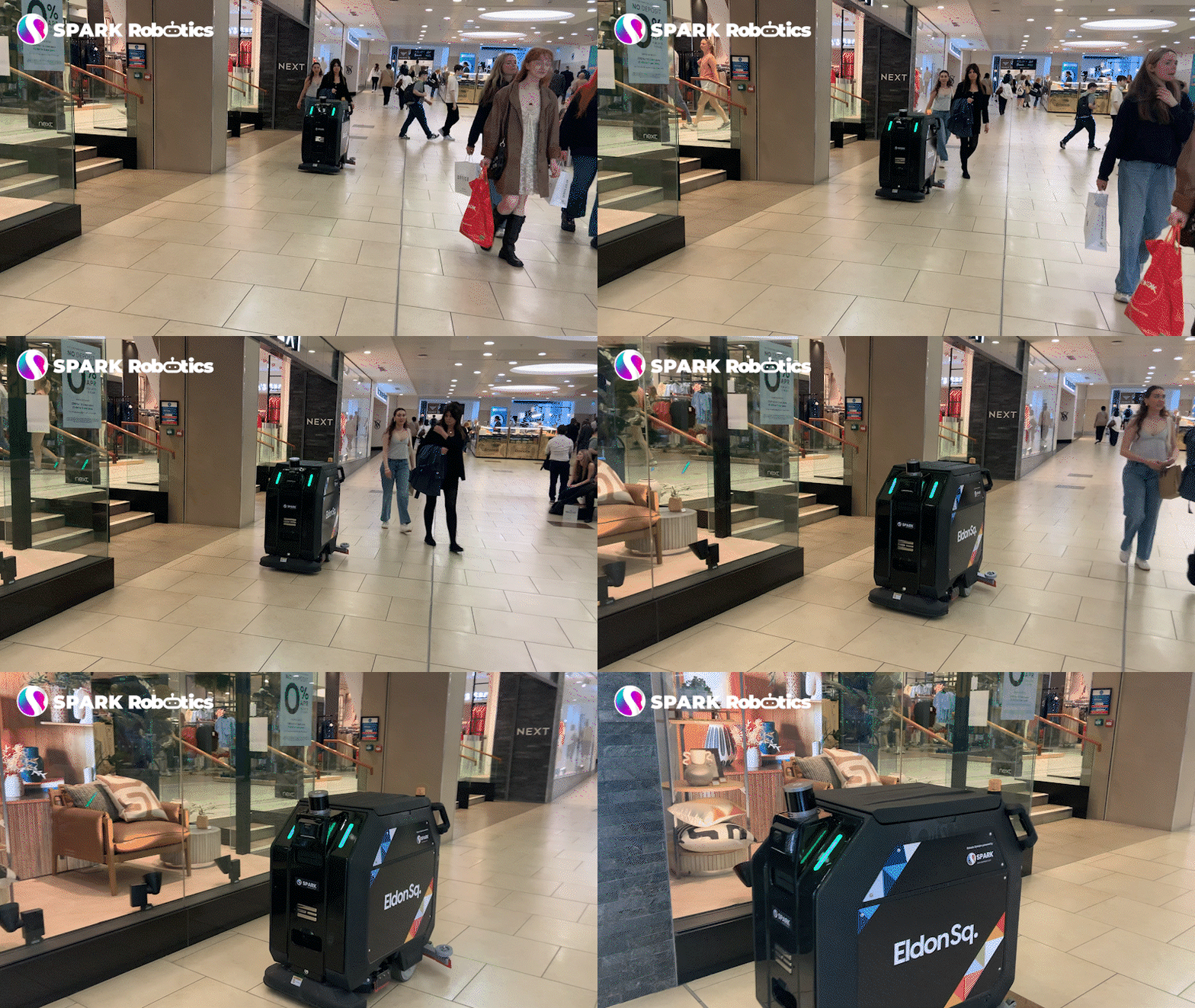
The operational feedback from Eldon Square also supports that point. Site team members said the robot reduced pressure on staff, worked efficiently during busy periods, and improved productivity by allowing time to be used more effectively. That is a much stronger sustainability story than simply saying a robot is advanced. It shows how automation can support environmental goals while improving how the site functions every day.
Why Smarter Resource Management Matters More Than Ever
Savills points out that for many retail assets, creating greener stock depends heavily on improving existing operations and retrofitting current buildings rather than starting from scratch. It also notes that schemes aligned with environmental and social policies may become more attractive because of operational efficiency and stronger support from tenants and customers.
It is highly visible, operationally essential, and repeated every day. Small efficiency gains in cleaning can become meaningful when multiplied across months and years of site activity. That is why robotics is becoming a practical sustainability conversation rather than a futuristic one. For operators looking at long-term efficiency, it offers a way to improve an essential service area without waiting for a major estate overhaul.
Is Robotic Cleaning Too Costly or Too Complex?
A common concern is that robotic cleaning sounds promising in theory, but may be too expensive, too difficult to manage, or too disruptive for a busy shopping centre.
That concern is understandable. Any new operational technology has to prove that it can work reliably in a live public setting. But this is exactly why the buyer conversation needs to focus on outcomes, not novelty.
The Eldon Square example suggests that when robotic cleaning is deployed properly, it can do exactly that. The site did not simply gain a new machine. It gained a more repeatable cleaning model that helped reduce pressure on the team and supported sustainability goals through measurable resource savings.
Why the Right Cleaning Strategy Delivers More Than Environmental Benefits
The biggest mistake in this conversation is treating sustainability as a separate benefit. In practice, the most effective sustainability improvements are often the ones that also improve operational performance.
For shopping centres, that matters because cleaning is not just a background task. It shapes visitor perception, supports safety and standards, and affects how efficiently the building runs. When sustainable cleaning is approached in this way, robotics becomes less about technology adoption and more about operational improvement.
See What Sustainable Cleaning Could Look Like in Your Shopping Centre
If your shopping centre is reviewing how to improve cleaning efficiency, reduce unnecessary resource use, and support broader sustainability goals, robotic cleaning is worth exploring in a real operational context.
Book a demo with SPARK Robotics to see how autonomous cleaning can support cleaner floors, smarter resource use, and more efficient day-to-day operations across your site.