














Earth Day 2026: How Cleaning Robotics Are Driving a Smarter, Greener Future
Earth Day is often a moment for businesses to talk about sustainability in broad terms. It can sometimes feel distant from the realities of site management. For operations teams, the daily focus is usually on maintaining standards, managing labour, keeping public areas safe, and making sure the site runs smoothly. But that is exactly why Earth Day matters.
For businesses across hospitality, retail, logistics, and public spaces, the challenge is clear:
How do you reduce environmental impact without increasing costs or compromising service quality?
At SPARK Robotics, we see cleaning automation not just as a technological upgrade, but as a practical pathway towards stronger ESG performance and measurable ROI.
The Hidden Environmental Cost of Traditional Cleaning
Individually, these issues may seem minor. At scale, across hotels, shopping centres, transport hubs, and large commercial environments, they contribute to a significant environmental footprint. Conventional cleaning operations are often more resource-intensive than they appear. Common challenges include:
- Excessive water usage caused by manual inefficiencies
- Overuse of chemicals without precise dosing
- Energy heavy equipment with inconsistent utilisation
- Labour-driven processes that can lead to variable quality and repeated work
Enter Cleaning Robotics: Precision Meets Sustainability
Autonomous cleaning robots are changing how cleaning is delivered, helping businesses improve consistency while using resources more efficiently.
1. Optimised Water and Chemical Usage
A robotic system is not only more sustainable, but it can also help lower consumable costs over time. It uses controlled dispensing technology to support minimal water waste, more accurate chemical ratios, and reduced environmental discharge.
2. Energy Efficiency by Design
Modern cleaning robots can lower energy consumption per square metre cleaned and make more efficient use of equipment throughout the day. This is supported by features such as smart route planning that reduces unnecessary repeat paths, scheduled operation during off peak hours, and high efficiency battery systems that help maintain consistent performance with less wasted energy.
3. Data-Driven Cleaning Means Less Waste
Unlike manual processes, robots generate operational data that helps businesses target cleaning more precisely and avoid unnecessary repetition, reducing wasted time, water, and energy. This can include area coverage tracking, cleaning frequency optimisation, and performance analytics, all of which support a more efficient and better informed cleaning strategy.
4. Reduced Carbon Impact Through Labour Optimisation
Fewer inefficiencies across the cleaning process can support a lower impact operation overall. This allows staff to move away from repetitive, resource heavy tasks and focus more on quality control, customer facing responsibilities, and operational supervision, helping teams use their time more effectively while maintaining stronger operational standards.
Sustainability That Also Delivers ROI
One of the biggest misconceptions is that sustainability comes at a cost. In reality, robotics enables:
- Up to 50% reduction in costs and operational losses
- 64% ROI over five years
- Lower consumable spend (water, chemicals, parts)
- Extended asset lifespan through consistent operation
- Measurable ESG reporting for stakeholders
Real World Impact Across Industries
In many settings, robots are also becoming part of the visible customer experience, reinforcing a business’s commitment to innovation, cleanliness, and sustainability. From hotels such as Maldron and Staycity to large-scale retail and logistics environments, cleaning robots are already being used to:
- Maintain high cleaning standards with fewer resources
- Support sustainability and operational reporting
- Strengthen brand perception as an environmentally responsible business
Case Study: SPARK redefines commercial cleaning at Eldon Square
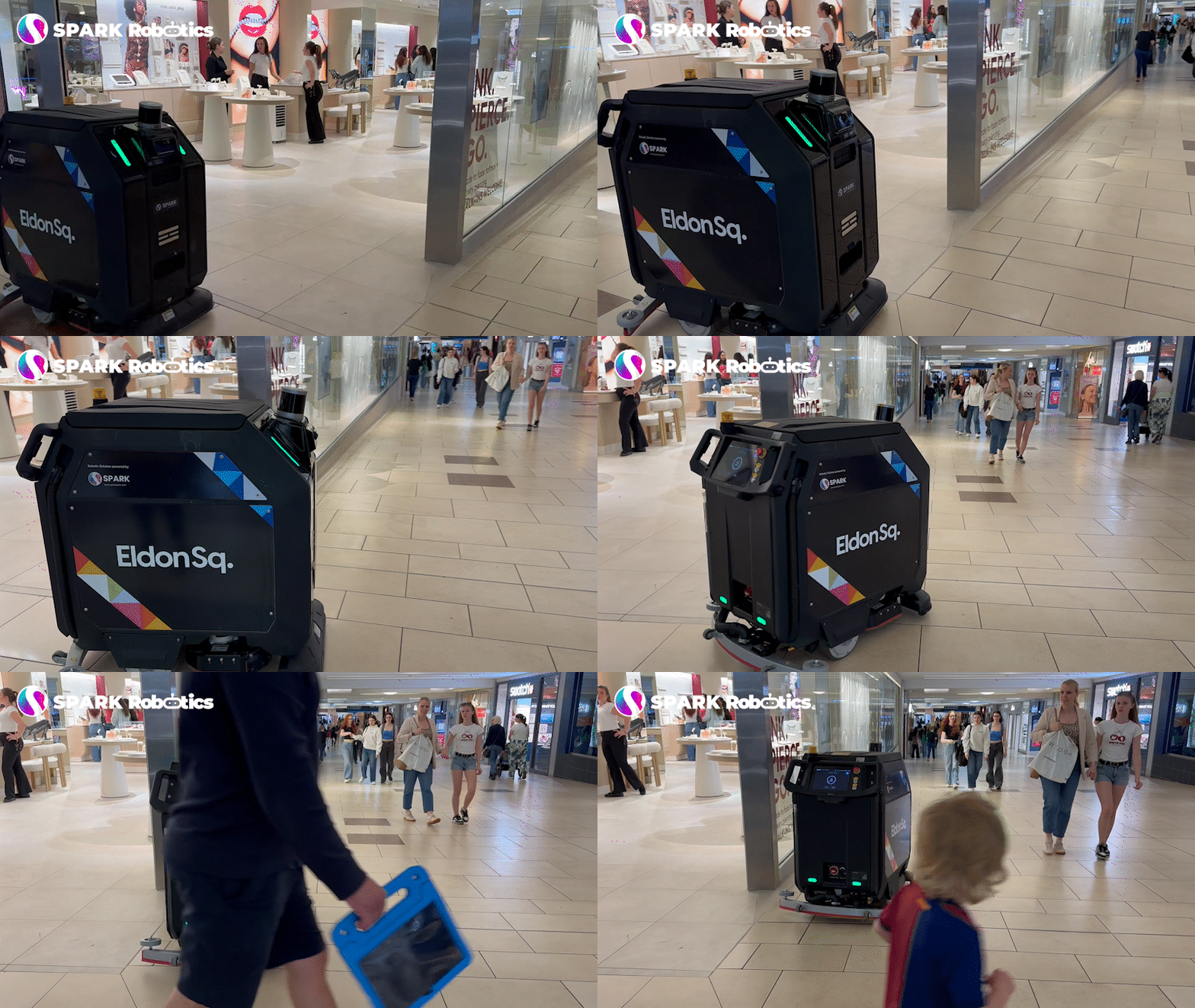
To demonstrate how sustainability and automation come together in practice, SPARK Robotics deployed autonomous cleaning robots at Eldon Square, one of the UK’s busiest retail destinations.
Deployment Context
Eldon Square presented the kind of environment where cleaning performance needs to be both consistent and scalable. As a high-footfall shopping centre with large, continuously used floor areas, the site required a cleaning approach that could maintain visible standards throughout trading hours without creating disruption or adding unnecessary operational strain.
Solution
The solution involved deploying autonomous cleaning robots across key zones within the shopping centre and integrating them into the daily cleaning schedule, including optimisation during off-peak periods. This was supported by ongoing monitoring and service support from SPARK, helping ensure the deployment remained effective, consistent, and aligned with the site’s operational needs.
Measurable Outcomes
- The robot has logged more than 1,194 hours of autonomous cleaning, completed 433 tasks, and covered over 929,929.58 square metres
- Saved more than 45,370 litres of water compared with traditional cleaning methods
- Reduced dependence on manual cleaning, lowering operational strain
- More consistent cleaning quality regardless of time or staffing levels
- More efficient use of resources, including water and cleaning chemicals
- Improved operational efficiency, particularly during peak retail hours
ESG Impact
From an ESG perspective, the deployment helped support lower resource consumption per square metre cleaned and a reduced environmental footprint compared with traditional cleaning methods. It also contributed towards broader sustainability reporting and ESG targets, giving the site a more measurable and operational approach to environmental performance.
Beyond Automation: Building a Sustainable Ecosystem
At SPARK Robotics, we believe the future is not just about deploying robots. It is about building a more sustainable operational ecosystem.
That can include:
- integration with smart EPoS and facility systems
- Predictive maintenance to extend the robot’s lifespan
- centralised analytics for multi-site optimisation
- continuous improvement through AI-driven insights
Why This Matters on Earth Day
Earth Day 2026’s theme, Our Power, Our Planet, is ultimately about responsibility being shared across people, organisations, and communities. It is a reminder that environmental progress depends on everyday actions, not only on high-level policy.
For businesses, that means the sustainability conversation needs to reach beyond broad commitments and into the daily operation of the site.
Cleaning is one of the most visible and repeated service activities in any commercial environment. If that part of the operation can be delivered in a more efficient, data informed, and resource conscious way, then Earth Day becomes more than a message. It becomes a prompt for better decisions.
Explore a More Sustainable Way to Clean
If your business is reviewing how to improve cleaning efficiency, reduce pressure on teams, and support broader sustainability goals, robotics is worth exploring in a practical operational context.
Speak to SPARK Robotics about how robotic cleaning can help your site maintain high standards while supporting smarter, more sustainable operations.