














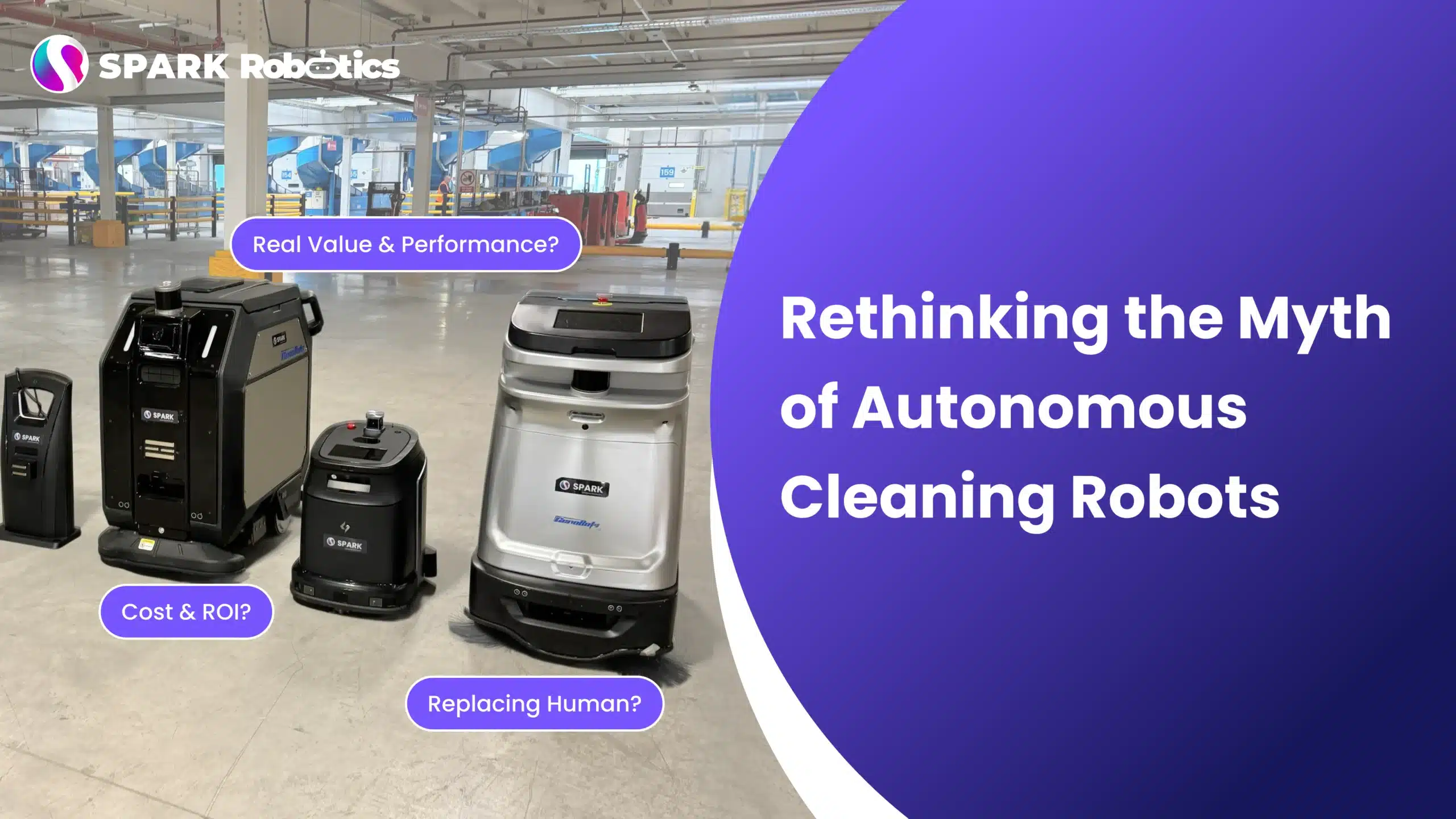
Rethinking the Myth of Autonomous Cleaning Robots
Autonomous cleaning robots are often presented as a simple answer to a complex problem. The promise is easy to understand. Less manual work, more consistent cleaning, lower pressure on teams, and a smarter approach to cleaning operations. For many businesses, that sounds like the future of cleaning.
In this blog, we will rethink some common myths of autonomous cleaning, where cleaning robots genuinely add value, and why the strongest results come when businesses focus on practical deployment.
Where Autonomous Cleaning Robots Do Add Real Value
Autonomous cleaning robots are often most effective when they are used to take on repetitive, time-consuming, and labour-intensive floor care tasks. In those situations, they can help create a more stable and efficient cleaning model.
That value usually appears in a few key ways.
More consistent routine floor care
Repeatable cleaning is one of the clearest strengths of robotics. Where large areas need to be cleaned regularly, automation can help maintain a more predictable standard across the day.
Better use of staff time
When robots take on repetitive floor coverage, staff can focus more on detailed cleaning, reactive issues, inspections, and the parts of the operation that need human input.
Stronger support for large environments
In sites with wide floor areas, long operating hours, or multiple zones, cleaning robots can help reduce the operational strain of maintaining consistent coverage manually.
Improved operational visibility
Many robotic systems also provide reporting, coverage tracking, and cleaning data. That creates better visibility over what has been cleaned, how often, and where performance can be improved. These are the areas where autonomy becomes commercially relevant. Not because the robot works alone, but because it helps the wider operation work better.
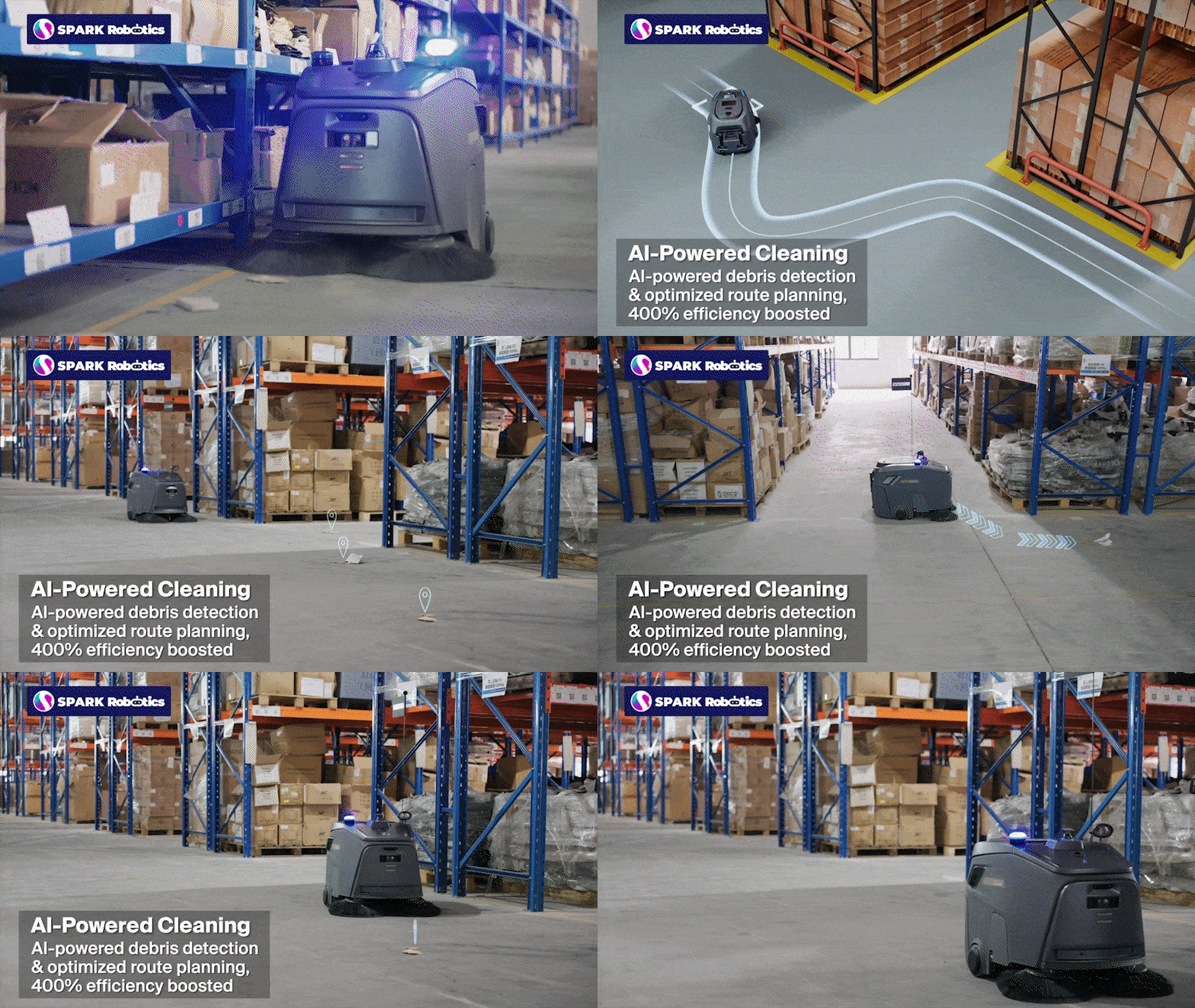
Myth 1: Cleaning Robots Cost Too Much to Be Practical
Cost could be the biggest concern. The upfront investment can look high, and businesses may also worry about batteries, maintenance, and charging infrastructure. On the surface, that can make robotics seem difficult to justify its ROI.
Reality: Cost Should Be Viewed in Operational Context
The more useful question is not simply whether a robot has a cost. It is whether it helps create a more efficient cleaning model over time. Many modern cleaning robots use a dedicated work station for automatic charging, which means they can return, recharge, and prepare for the next task without manual involvement. They can also operate during out-of-hours periods, helping businesses maintain cleaning standards when staff are off shift. When viewed in an operational context, robotics is not only an equipment cost. It is part of a wider decision about labour efficiency, consistency, and long-term return.
Myth 2: Cleaning Needs the Human Touch
That is true in many service environments, which leads some people to assume that robotics can never play a meaningful role in cleaning.
Reality: The Human Touch Matters Most Where People Add the Most Value
The human touch still matters, but not every cleaning task requires it in the same way. Routine floor cleaning is one of the most repetitive and time-consuming parts of the operation, and it is exactly the kind of task robotics is well-suited to support. By allowing robots to take on structured floor care, businesses can free up their teams to focus on guest interaction, detail cleaning, and the service standards that still rely on human judgment. In that sense, robotics is not about removing people from the operation. It is about helping them spend more time where they matter most.
Myth 3: Cleaning Robots Are Just a Gimmick
A common misconception is that autonomous cleaning robots are mainly a novelty or a marketing gimmick. That view is understandable, especially when many first encounters with robotics happen at exhibitions, through short demonstration videos, or in highly polished promotional content.
Reality: Their Value Comes from Practical Use
Cleaning robots are there to take on repetitive floor care, improve cleaning consistency, reduce manual strain, and help teams work more efficiently across large or demanding spaces. Their value is not measured by how futuristic they look, but by how well they fit the task, the site, and the wider cleaning operation. When matched to the right environment, a cleaning robot becomes a practical part of the cleaning strategy, not just a piece of technology that draws attention.
Myth 4: Cleaning Robots Are Too Slow for Busy Environments
This is one of the most common criticisms of autonomous cleaning robots. Because they do not move at the same pace as a person walking across the floor, they can appear too slow for fast-moving environments. That can lead to the assumption that they are inefficient in busy settings.
Reality: Efficiency Comes from the Cleaning Result
In commercial cleaning, efficiency should not be measured by movement speed alone. It should be measured by the result delivered. Cleaning robots are designed to complete the task properly, often scrubbing and drying in a single pass. That helps maintain cleaning quality, reduces the risk of secondary contamination, and avoids the need to go back over the same area again. The real value is not how fast the robot moves, but how consistently and efficiently it completes the job.
Cleaning Robots in Real World Performance
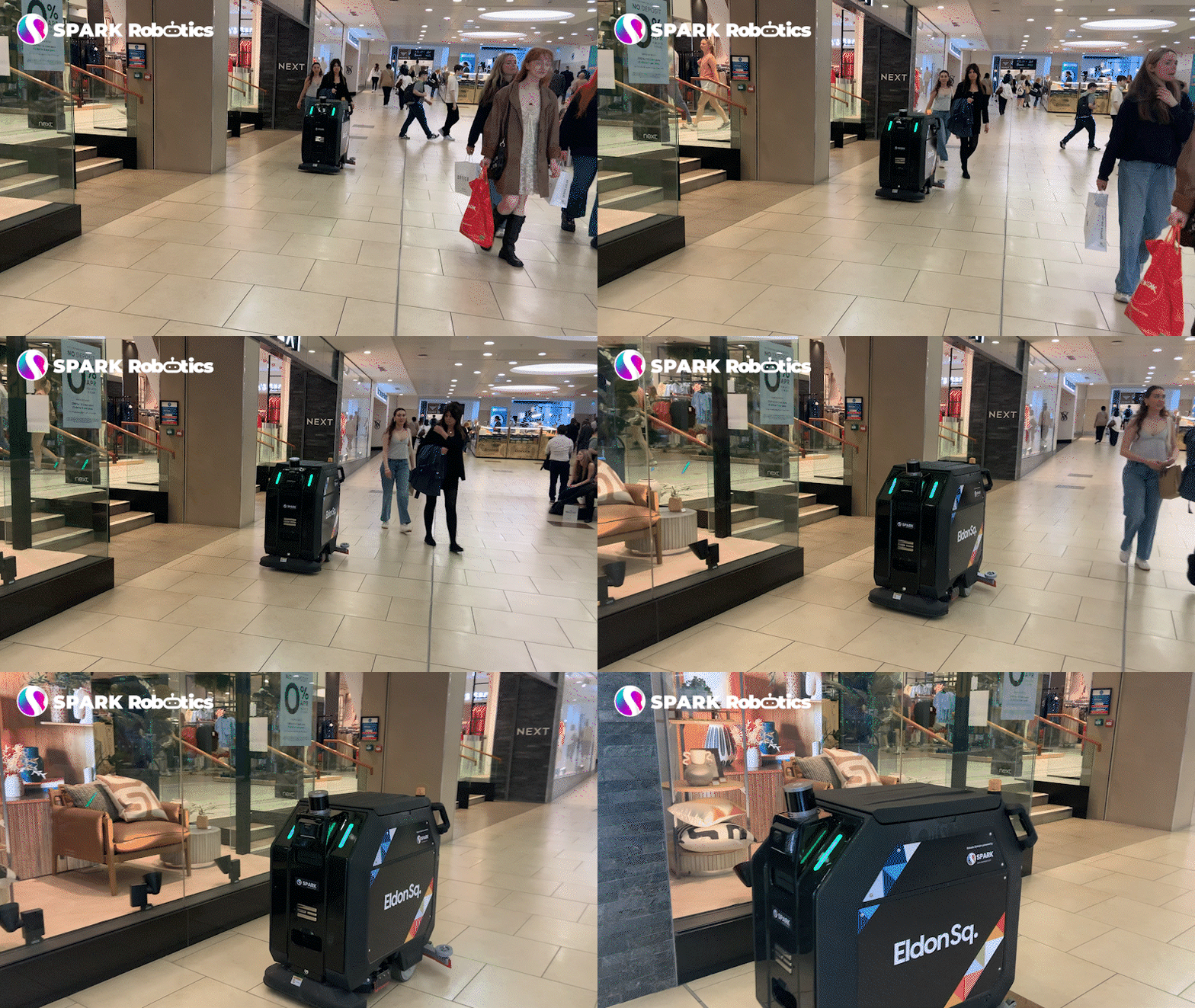
Cleaning robots are already being deployed across the UK in hospitality, warehousing, retail, and many other industries. They deliver measurable operational results, improve cleaning consistency, and support teams more effectively in demanding environments.
Eldon Square, the first shopping centre in Newcastle to deploy a cleaning robot, has reduced water usage by 69% and electricity use by 55% by using L50 and its intelligent water and energy management system. L50 can clean up to 2,570 square metres per hour, operate for up to six hours on a single charge, and return automatically for recharge or refill without human intervention. This shows that, in the right environment, cleaning robots can deliver more than automation alone. They can support sustainability, improve efficiency, and maintain high cleaning standards in real-world operations.
Explore Practical Robotics for Real-World Cleaning Operations
If your business is reviewing how robotics could support more efficient, consistent, and practical cleaning operations, we can help you assess what fits your environment and operational goals.
Speak to SPARK Robotics to explore cleaning robotics that are built around real-world use, measurable value, and the needs of modern commercial environments.