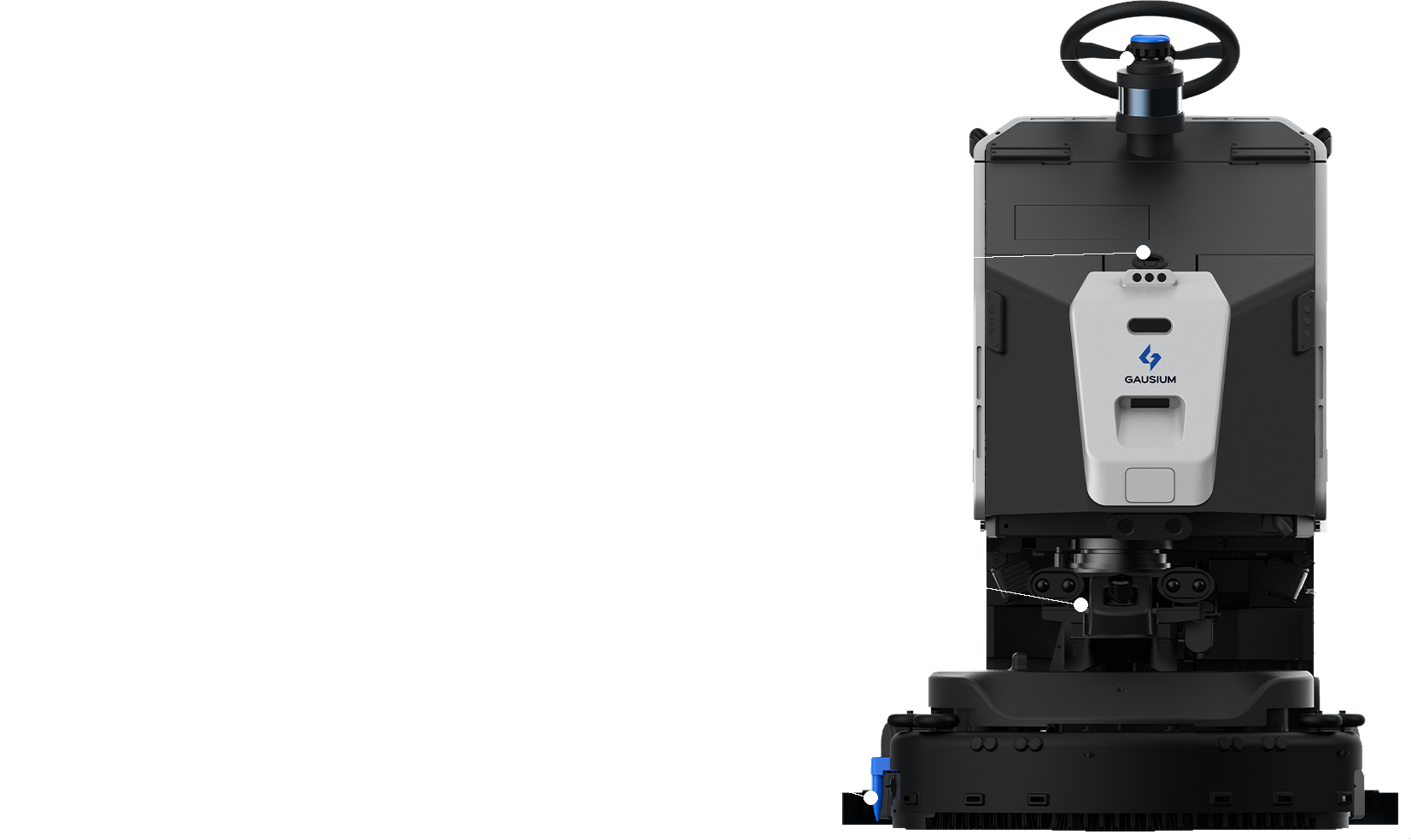
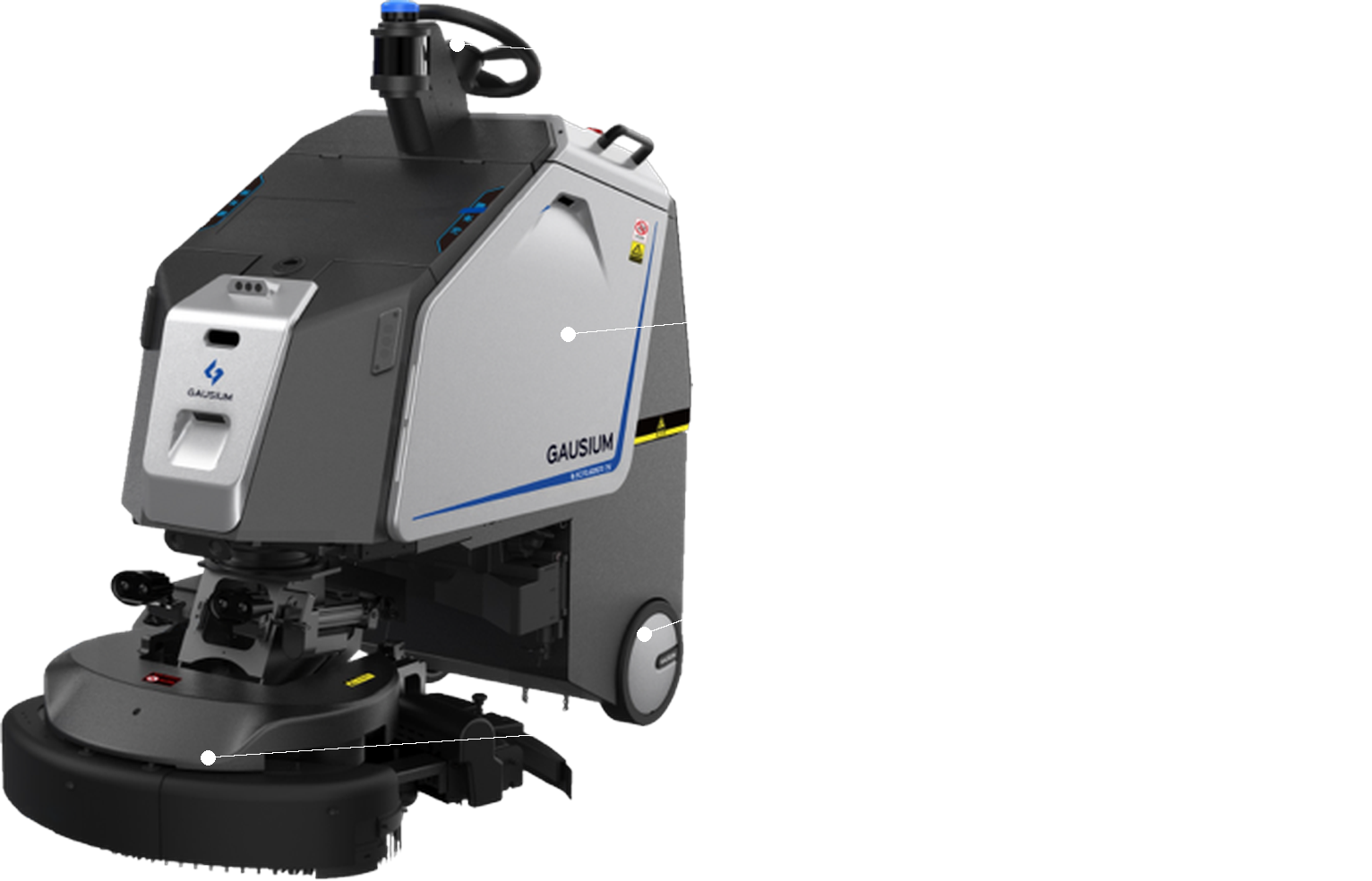
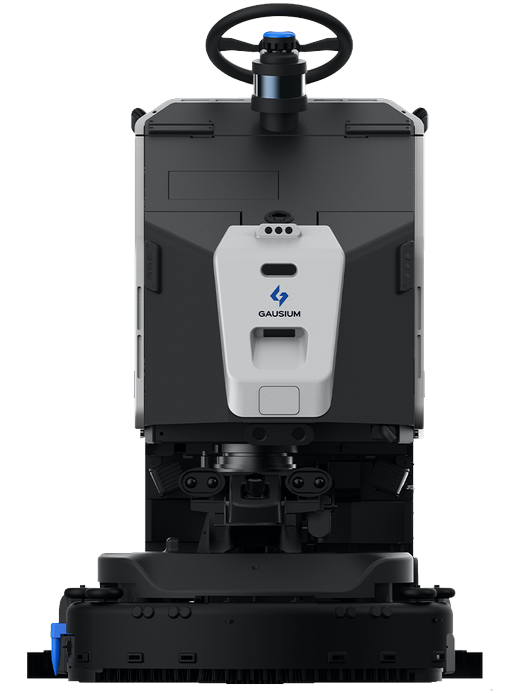
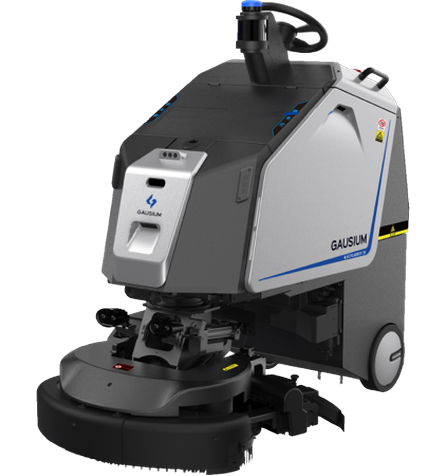

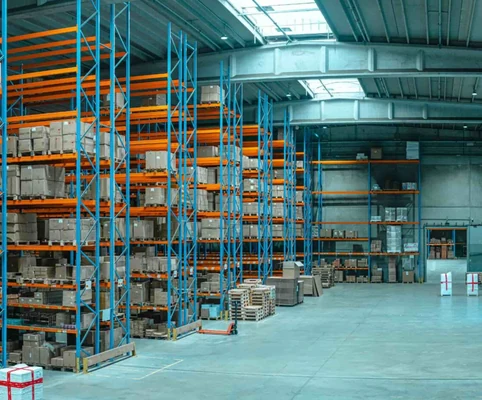
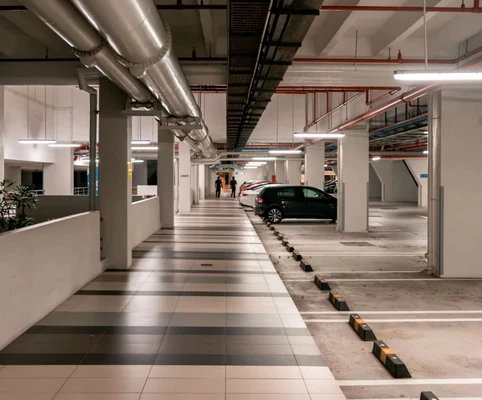
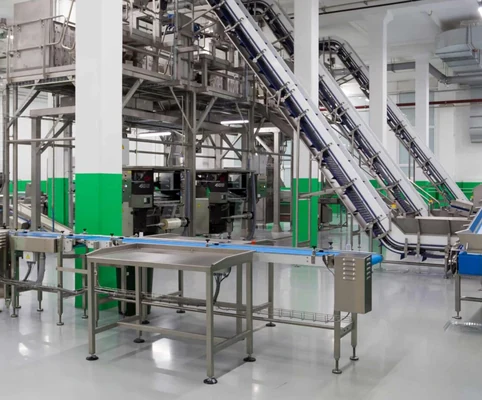

- Best for warehouses, factories, car parks, airports and stations
- Up to 3,000 m²/h with 45 kg brush pressure
- 3D LiDAR and 20+ sensors for smart obstacle avoidance
Automate heavy-duty floor cleaning with the Scrubber 75
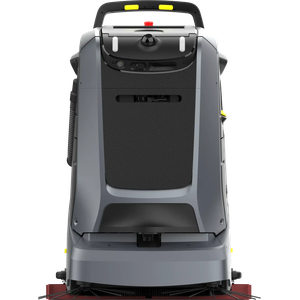
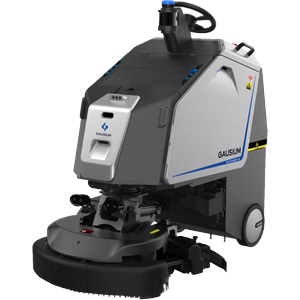
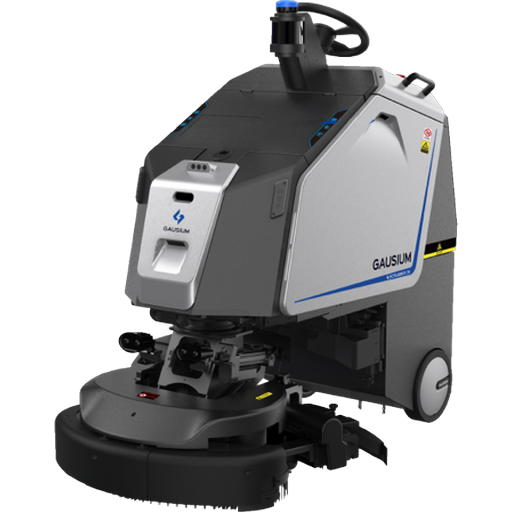
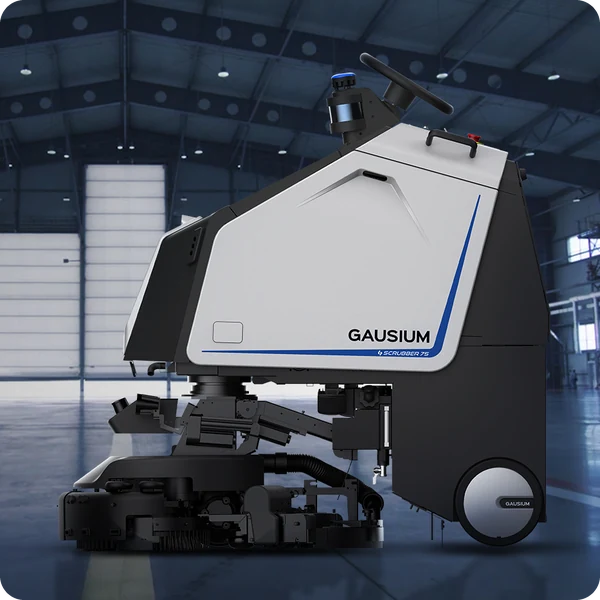
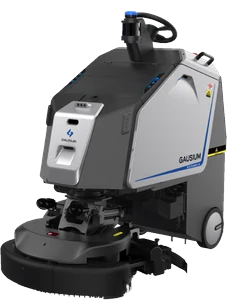
The Gausium Scrubber 75 is a heavy-duty autonomous floor scrubber and Gausium’s classic flagship cleaning robot. With a 750 mm scrubbing width, 45 kg brush pressure and a 75 L clean water tank, it handles large-area cleaning in warehouses, factories, car parks and transport hubs, while 20+ sensors keep it working safely around people and vehicles.
Best for
Large-area, heavy-duty scrubbing
Primary task
Autonomous scrubbing, with optional roller brushes for debris
Environment
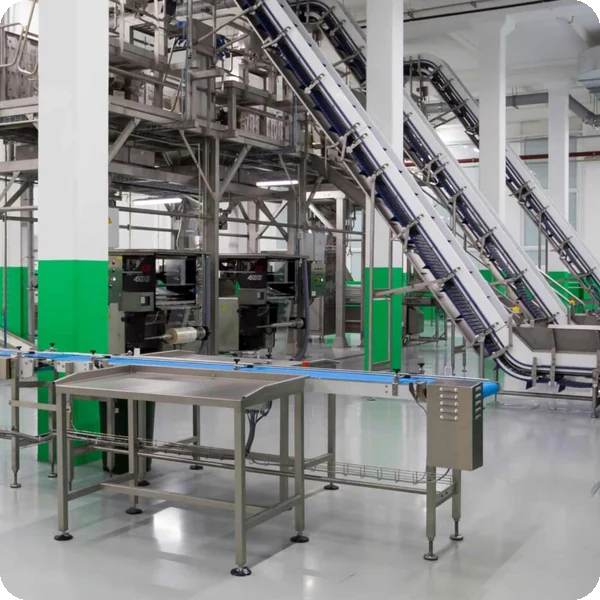
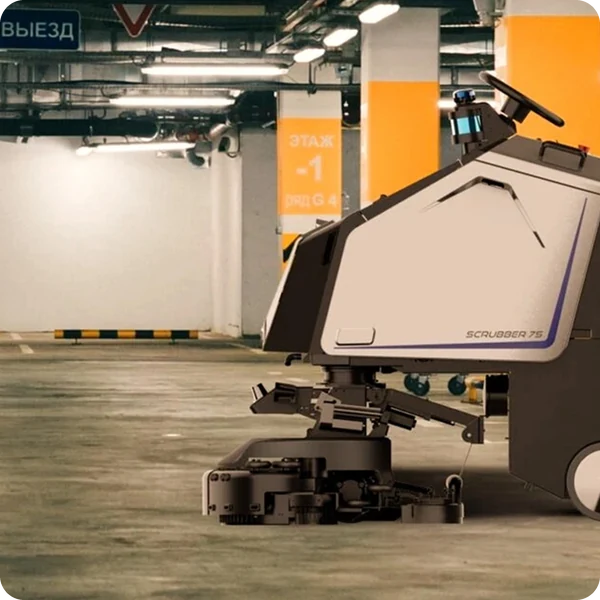
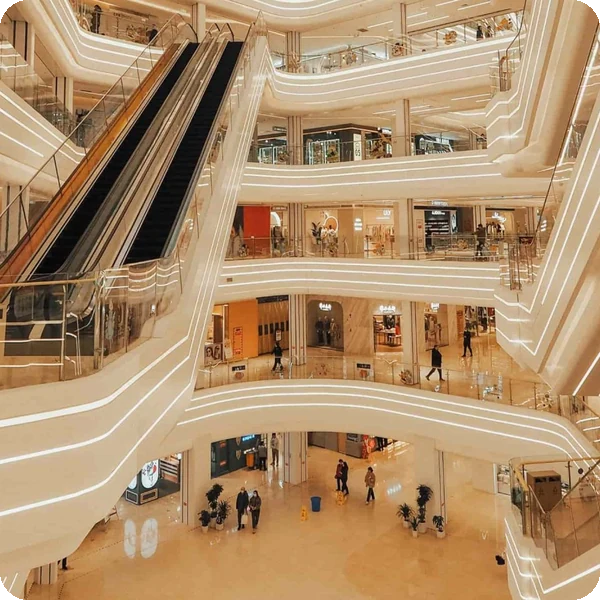
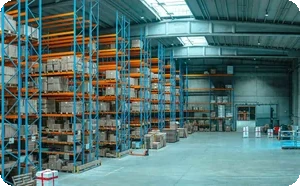
Warehouses, factories, car parks, airports and railway stations
Deployment type
Mapped autonomous deployment, with SPARK site assessment, training and ongoing support
Keep large, busy floors clean without tying crews to ride-on scrubbers
Warehouses, factories, car parks and transport hubs have huge floor areas, stubborn dirt and constant vehicle and pedestrian traffic.
Large floors take hours to scrub
Manual ride-on scrubbing ties up staff for long shifts across very large spaces.
Up to 3,000 m²/h, hands-free.
A 750 mm cleaning width and up to 3,000 m²/h theoretical efficiency (700–1,400 m²/h in practice) let one robot cover very large floors on its own.
Vehicles and people share the floor
Busy warehouses and car parks make autonomous cleaning hard to run safely.
20+ sensors & dynamic mapping
3D LiDAR, 2D LiDAR, a 3D camera, collision and anti-drop sensors detect obstacles, while dynamic mapping updates the map and reroutes in real time.
Oil and stubborn stains resist light cleaning
Car park and industrial floors collect oil, tyre marks and embedded dirt.
45 kg brush pressure & oil cleaning mode
Strong brush pressure scrubs deep, and an oil cleaning mode with a detergent kit removes stubborn oil stains.
Corners and edges get missed
Large machines often leave dirt in corners and along walls.
270° rotational scrub deck
The scrub deck rotates 270° to reach into 90° corners for more complete coverage.
Key outcomes
Ultimate productivity
Cover very large floors without a ride-on operator. Scrubber 75 is built for heavy-duty, large-area cleaning.
750 mm cleaning width · 45 kg brush pressure · 75 L clean water tank · up to 3,000 m²/h.
Frees cleaning teams from long ride-on scrubbing shifts.
Best-in-class
sensing
Clean safely around people and vehicles. 20+ sensors give all-round awareness.
3D LiDAR · 2D LiDAR · 3D camera · collision and anti-drop sensors · millimetre-wave radar on the 75 P.
Dynamic mapping updates routes in real time, so the robot doesn’t get lost or stuck.
Ergonomic manual operation
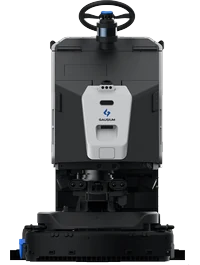
Drive it yourself when you need to. Switch to manual mode at any time.
Stand-on pedal · 270° steering wheel · 1.1 m/s max speed · 8° gradeability.
Makes moving between areas and spot jobs quick and easy.
Saves water, manages itself
Use less water and less staff time. The robot recycles water and docks itself.
Multi-stage water recycling · around 80% less fresh water · workstation for charging, refill and drain.
Cuts water use and reduces manual refilling and emptying.
What powers the Scrubber 75's heavy-duty cleaning
Dual cleaning modes
45 kg brush pressure
Large water tanks
20+ sensors
Long runtime
Water recycling
How it works
01.
Map and plan
SPARK maps your site with the Scrubber 75 and sets up cleaning areas, routes and schedules for your floors.
What the Scrubber 75 handles
Builds the map with its 3D LiDAR and sensors, and plans efficient scrubbing routes.
Where people step in
Your team confirms the cleaning areas and schedules. The exact SPARK deployment process TBC
02.
Run the workflow
Let Scrubber 75 clean autonomously, scrubbing large areas while it detects and avoids people, vehicles and obstacles.
What the Scrubber 75 handles
Carries out scrubbing, obstacle avoidance and real-time map updates, rerouting itself when the environment changes.
Where people step in
Operators can take over with the stand-on pedal and steering wheel. Exact exception and takeover procedures TBC
03.
Monitor and improve
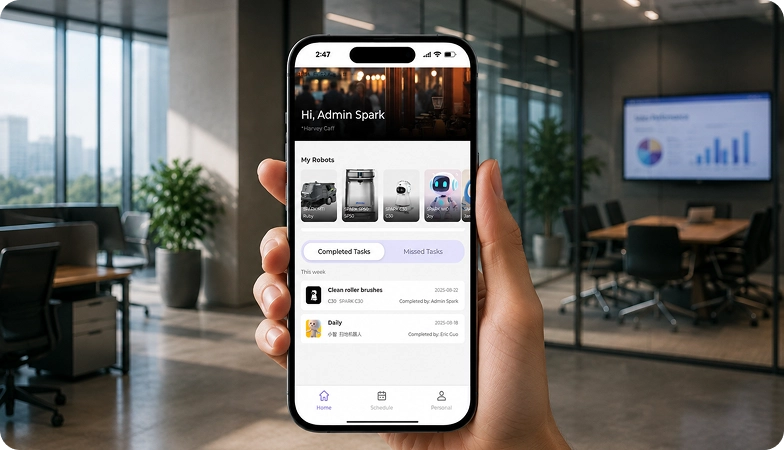
Track and control cleaning tasks remotely with the Gausium mobile app, while the workstation handles charging and water.
What the Scrubber 75 handles
Docks itself to charge, refill clean water and drain waste water at the workstation.
Where people step in
People remain responsible for reviewing performance and deciding when adjustments, maintenance or further configuration are needed. TBC
Use cases and environments
Airports & Transport Hubs
Large concourse cleaning around busy passenger traffic.
Public Car Parks
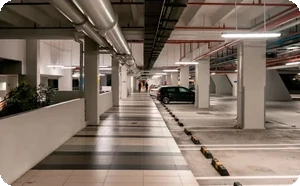
Routine scrubbing of multi-storey and underground car parks.
Product in action
Gausium Scrubber 75 cleaning modes
Scrubber 75 outdoor cleaning
Technical specifications
Specification
- Max. cleaning efficiency (theoretical)
- Practical cleaning efficiency
- Cleaning width
- Brush pressure
- Max. cleaning speed
- Cleaning modes
- Oil cleaning mode
- Scrub deck
Scrubber 75
- 3,000 m²/h | 32,292 ft²/h
- 700–1,400 m²/h | 7,535–15,069 ft²/h
- 750 mm | 29.5 in
- 45 kg | 99 lb
- 1.1 m/s | 2.5 mph
- Scrubbing; scrub + sweep with optional roller brushes
- Yes, with detergent kit
- 270° rotational
Specification
- Dimensions (L × W × H)
- Net weight
- Clean water tank
- Waste water tank
- Min. pass width
- Min. U-turn width
- Trash tray
- Manual mode
Scrubber 75
- 1,370 × 962 × 1,417 mm
- 400 kg | 900 lb
- 75 L | 20 gal
- 50 L | 13 gal
- 1,400 mm | 55.1 in
- 2,000 mm | 78.7 in
- Optional (EU)
- Stand-on pedal and steering wheel
Specification
- Sensors – 75 S
- Sensors – 75 P
- Mapping
- Obstacle detection
- Lighting
- Gradeability
- Edge cleaning
- Safety certification
Scrubber 75
- 3D LiDAR, 2D LiDAR, 3D camera, air-pressure collision sensor, anti-drop sensor
- As 75 S, plus millimetre-wave radar
- Dynamic mapping with real-time rerouting
- People, vehicles and obstacles
- Flashing lights, headlights, side projection lights
- 8°
- 270° rotational scrub deck for 90° corners
- TBC
Specification
- Battery type
- Battery capacity
- Runtime
- Charging time
- Auto charging
- Auto water refill and drain
- Rated voltage
- Water recycling
Scrubber 75
- TBC
- TBC
- ≈ 4–6 h
- ≈ 6 h
- Yes, at the workstation
- TBC
- Multi-stage filtration, around 80% less fresh water
Specification
- Fleet management
- Remote monitoring
- App
- Reports
- Network
- Software updates
- Integrations
- Remote deployment
Scrubber 75
- TBC
- Yes, via mobile app
- Gausium mobile app (monitor and control)
- TBC
- TBC
- TBC
- TBC
- TBC
Specification
- Floor types
- Environment
- Min. pass width
- Gradeability
- Ingress protection
- Operating temperature
- Max. threshold height
- Noise
Scrubber 75
- Natural stone, artificial stone, ceramic, concrete, PVC & vinyl, epoxy
- Large indoor commercial and industrial spaces, car parks
- 1,400 mm | 55.1 in (1,800 mm in underground garages)
- 8°
- TBC
- TBC
- TBC
- TBC
Specification
- Workstation
- Disc brushes
- Roller brush
- Trash tray
- Headlights
- Millimetre-wave radar
- Detergent kit
- Spare parts kit
Scrubber 75
- Self-docking charging, water refill and drain
- Deep scrubbing
- Optional (EU)
- Optional (EU)
- Optional (EU)
- Standard on 75 P, optional (EU)
- For oil cleaning mode
- TBC
Deployment and integration
From site survey to launch, SPARK prepares your robot for your site, your workflow and your team.

01 — Site survey
We assess your requirements and site conditions to help plan your robot deployment.

02 — Mapping
The operating area is mapped for autonomous operation before handover.

03 — Workflow design
We develop a deployment plan around your site and operational requirements.

04 — Integration
Integration requirements are assessed for each deployment, while tasks, schedules and reports are managed through the app.
05 — Training
SPARK provides user training as part of its after-sales support.

06 — Launch
Launch follows completion of site preparation, mapping, workflow setup and training.

Site Assessment
Understand the facility, floor types, traffic patterns and operational requirements.

Robot Deployment
Introduce the robot into daily operations with minimal disruption.

Mapping
Configure operating areas and routes according to the environment.
Remote Monitoring
Monitor robot operations and receive performance information through the app.

Training & Handover
Provide operators with the knowledge needed to manage the robot day to day.

Ongoing Optimization
Adapt maps and update software as the facility evolves.

Training & Handover
Provide operators with the knowledge needed to manage the robot day to day.

Remote Monitoring
Monitor robot operations and receive performance information through the app.

Ongoing Optimization
Adapt maps and update software as the facility evolves.

Site Assessment
Understand the facility, floor types, traffic patterns and operational requirements.

Mapping
Configure operating areas and routes according to the environment.

Robot Deployment
Introduce the robot into daily operations with minimal disruption.
What SPARK adds
We are not a box shifter. Deployment covers site survey, mapping, workflow design, integration planning, training and launch — so your robot arrives configured for your building rather than dropped at your loading bay.
If the survey shows the robot is wrong for your site, we will say so.
upSPARK and ongoing support
From installation and user training to software updates and on-site maintenance, we provide full after-sales support.

Technology That Keeps Improving
Every SPARK robot is managed through its manufacturer app and cloud platform, where operators can schedule tasks, monitor each robot remotely and review performance reports. SPARK supports you from installation and training through to software updates and maintenance.

maintenance tasks
Routine maintenance is kept simple, with clear schedules for brushes, filters, tanks and other consumables. SPARK guides your team through each task so the robot stays ready to work.

scheduling
Tasks and schedules can be set and adjusted through the app or control panel, so the robot works at the times that suit your site, including out of hours.

guided maintenance
SPARK provides step-by-step guidance for maintenance tasks, helping your team keep the robot running reliably with minimal downtime.

expert support
Our UK-based team provides expert after-sales support, including troubleshooting, on-site maintenance and help with optimising your robot routines.
Safety, compliance and governance
Compliance
Certification and conformity
Declaration of Conformity and certification documents for this robot are available on request for technical and procurement review.
Obstacle handling and safety
360° Environmental Awareness
SPARK robots use onboard sensors to detect obstacles, slow down or stop, and reroute where required. Detailed safety behaviour is covered in the product documentation.
Operating boundaries
Mapped operating areas
The robot operates within the mapped areas and configured routes set up during deployment. Operating conditions are listed in the technical specifications above.
Data and privacy
App and cloud management
Tasks, schedules and reports are managed through the manufacturer app and cloud platform. Details of data handling and privacy are shared as part of deployment planning.
Documents for review
Documentation pack
The user manual, specification sheet and conformity documentation can be shared for technical and procurement review.
Choosing between Spark cleaning robots
SH1
Mira
Scrubber 75
Frequently asked questions
Questions about using the Scrubber 75 at your site
What type of facilities can the Scrubber 75 clean?
Scrubber 75 is built for large, heavy-duty spaces such as warehouses, factories, underground car parks, airports, railway stations, hypermarkets and shopping centres.
Can the Scrubber 75 clean oil stains?
Yes. Its oil cleaning mode, used with a detergent kit, removes stubborn oil stains in car parks and heavily contaminated industrial areas.
How long can the Scrubber 75 operate?
Gausium lists a runtime of around 4–6 hours per charge and a charging time of around 6 hours. With the workstation, it can charge, refill and drain by itself.
Is the Scrubber 75 safe around vehicles and people?
Its 20+ sensors, including 3D LiDAR, a 3D camera and collision and anti-drop sensors, detect people, vehicles and obstacles. Its lights also show its position and direction to people nearby.
What is the difference between the Scrubber 75 S and 75 P?
The Scrubber 75 P is built for car parks: it adds automotive-grade sensing and lighting, including millimetre-wave radar, plus an oil cleaning mode for busy parking areas. The 75 S suits general large-area cleaning.
Can the Scrubber 75 be driven manually?
Yes. A stand-on pedal and 270° steering wheel let operators drive it manually whenever needed.
How do I request engineering support if there is a problem?
Contact the SPARK support team. We provide after-sales support including troubleshooting, software updates and on-site maintenance for your Scrubber 75.